
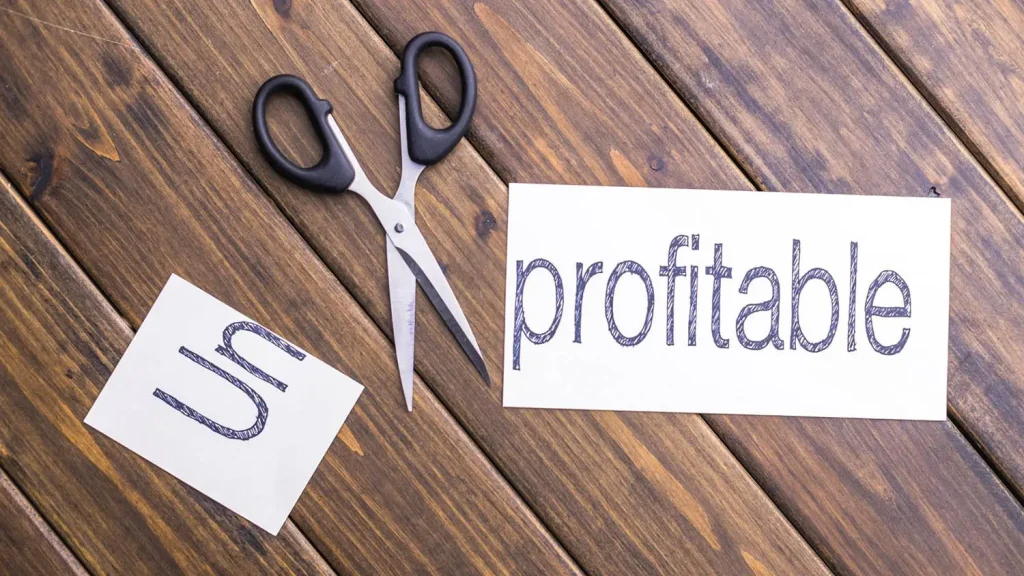
Growing But Not Profitable: The Hidden Trap of Small Business Success
If your business feels busier than ever but your bank balance tells a different story, you’re not alone.
Many small business owners hit a frustrating stage where they are growing but not profitable. Sales are up. The schedule is full. The team is stretched. Yet somehow, there’s no meaningful increase in take-home income — and sometimes even less.
This isn’t a motivation problem. It isn’t a hustle problem. It’s usually a structural problem.
Let’s unpack why businesses end up growing but not profitable — and how to fix it.
1. Revenue Is Not Profit
The first and most painful truth: revenue is vanity, profit is sanity.
When margins are thin, every new customer can actually increase stress without increasing income. Payroll grows. Materials cost more. Mistakes get more expensive. Cash flow tightens.
If your business is growing but not profitable, it often means growth is happening without margin discipline. At some point, the focus has to shift from “top-line growth” to profitable growth.
Growth that doesn’t improve margins isn’t growth — it’s pressure.
2. Your Pricing Hasn’t Kept Up with Reality
Many businesses outgrow their original pricing model.
What worked when you had:
- fewer customers
- simpler services
- lower costs
less complexity
often doesn’t work once the business becomes more complex. But many owners are reluctant to raise prices, even as expenses rise and operations get harder to manage.
If your costs have increased, your processes are more complex, and expectations are higher — but your pricing hasn’t evolved — you’re almost guaranteed to be growing but not profitable.
Pricing must reflect today’s reality, not yesterday’s comfort level.
3. Operational Inefficiencies Scale Faster Than Sales
Growth exposes weaknesses.
When systems, processes, and roles aren’t clearly defined, each new client adds friction instead of leverage. Tasks get duplicated. Errors increase. The owner becomes the bottleneck.
If adding revenue creates chaos instead of efficiency, your operations are scaling faster than your systems.
And that’s a direct path to growing, but not profitable.
4. The Owner Is Subsidizing the Business with Time
This one is subtle—but critical.
Many owners “make it work” by working more hours. They fill staffing gaps. They absorb mistakes. They skip paying themselves fully.
On paper, the business looks stable. In reality, the owner is subsidizing it with unpaid time and emotional bandwidth.
If profitability depends on exhaustion, the business model needs adjustment.
5. Too Many Low-Value Clients or Services
Not all revenue is good revenue.
Some clients take more time, create more problems, or generate less margin than they’re worth. Some services are popular but barely profitable once you account for labor, overhead, and management time.
If your business is growing through low-margin work, the result is predictable: more effort, same money—or worse.
One of the fastest ways to improve profitability is often by cutting or restructuring the wrong work, not adding more of it.
6. No Clear Financial Scorecard
You can’t fix what you can’t see.
Without simple, consistent financial metrics, most business owners are flying blind. They know revenue, maybe payroll—but not where money is leaking or which parts of the business actually generate profit.
A basic scorecard might include:
- gross margin by service or product
- profit per client
- labor cost ratios
-
cash flow trends
These numbers don’t need to be complicated—but they need to be visible.
7. Growth Decisions Are Reactive, Not Strategic
Hiring because you’re overwhelmed. Marketing because sales dipped. Expanding because competitors are doing it.
Reactive growth feels necessary in the moment—but it often leads to cash flow pressure, overstaffing, or misaligned investments.
Strategic growth starts with intention:
Why are we growing? What should growth improve? And what must be fixed before we add more demand?
The Bottom Line
If your business is growing but your bank account isn’t, the problem usually isn’t effort—it’s structure.
Profit comes from alignment: pricing that reflects reality, systems that support scale, clients that add value, and decisions made with intention—not panic.
If this sounds familiar, it may be time to step back and take a hard look at how your business is really working.
At Won Strategy, we help business owners diagnose these gaps and rebuild for profitable, sustainable growth.
If you’re ready to stop working harder for the same money, let’s talk.